Impact of Newark's Local Law Change
Newark lets 16-year-olds vote. What happened next complicates both sides of the argument.
By James Lu, Staff Writer · August 10, 2026 · 4 min read
Forty-five votes. Even though 1,524 residents ages 16 and 17 were registered, that was the whole under-18 voter turnout in Newark’s April 2026 school board election. In fact, the year prior, there were more votes, with 73 teens voting. But with that, registration also fell, from 1,772 teens in 2025.
Those numbers aren’t looking good. Those who support lowering the voting age should just say it plainly. Little immediate political force comes with a voting right when about 97% of eligible people don’t use it. The obvious argument that critics have now is that almost no new voters showed up, despite Newark changing its election laws and the state spending about $1 million to update its registration system.
However, that interpretation becomes less convincing when you compare teen turnout to the rest of Newark. In 2026, citywide turnout was only 3.2% while teen turnout was 2.95%. In the first youth election in 2025, teens actually voted at a rate of 3.94%, slightly beating out the city as a whole, which had a turnout of 3.47%. The larger problem was an election that attracted almost nobody, regardless of age.
It’s important to draw this distinction, because what’s happening in Newark is being used as a test of whether 16-year-olds are mature enough or interested enough to vote. In practice, Newark’s experience also tested whether a city could introduce a new class of voters into a low-turnout April election without providing them with reliable ways to participate.
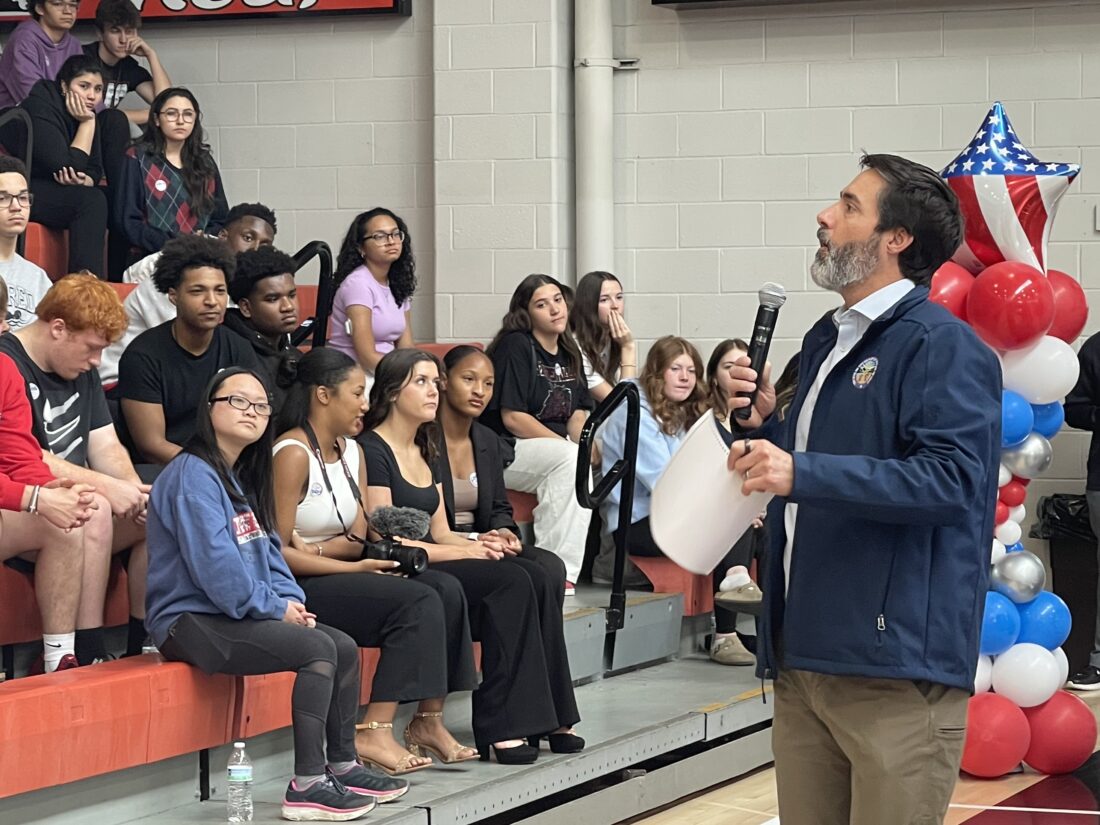
When teens tried to vote in 2026, some faced problems that would discourage any first-time voter. Cidell Torto, a junior at Science Park High School, said that a poll worker told her:
“You’re 16, you can’t vote.”
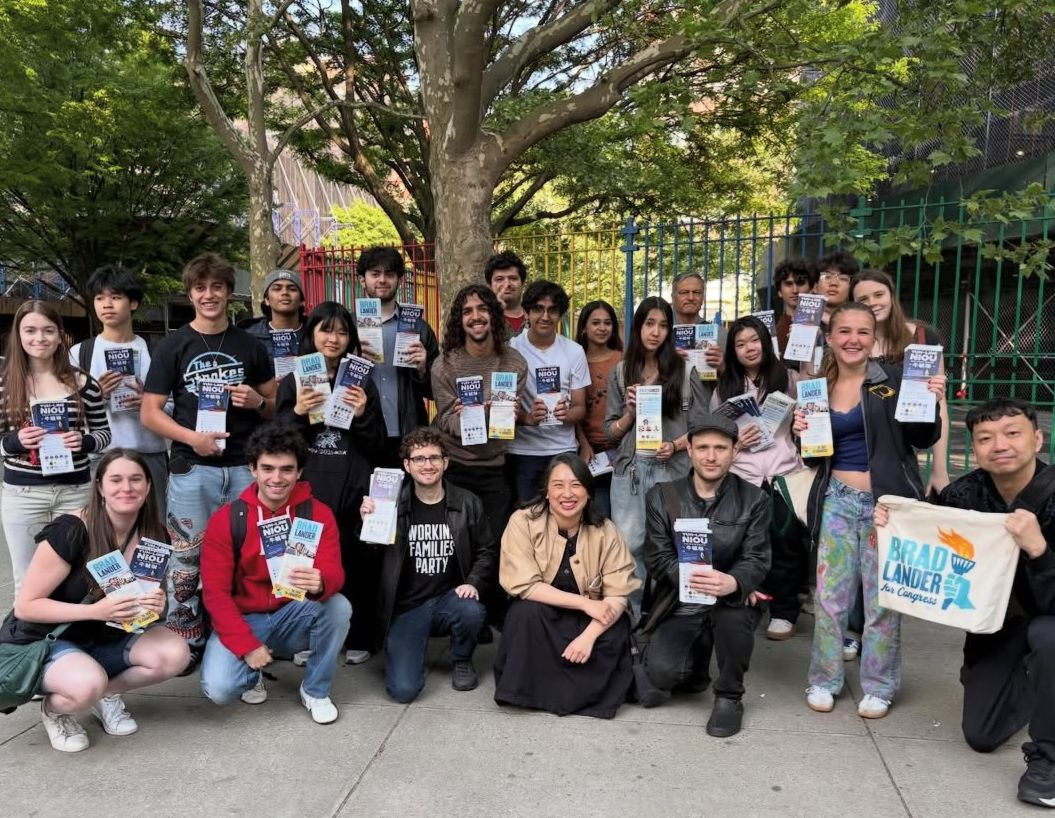
It wasn’t until an adult stepped in that she was able to cast her ballot. Another student, Fatoumata Bah, reached the correct polling location only to have the scanner jam while processing her ballot. Their youth coalition had knocked on roughly 3,000 doors before Election Day. It isn’t as if these students had never heard about the election since they were the ones who helped promote it; the system was just unprepared for them. But these problems alone can’t account for the other 1,479 registered teenagers who did not vote. Research on Newark’s 2025 election found a genuine lack of interest beyond the typical administrative failures. In a survey of older students at one public high school, 38.3% of nonvoters said they weren’t interested. About 27% said they were unsure whether they had registered, while others said they were busy, forgot about the election, didn’t know how to vote, or didn’t have enough information.
From this, the most straightforward conclusion is that Newark has both an interest problem and an access problem. Lowering the voting age permits kids to participate but doesn’t automatically form voting habits or give them an incentive to vote. Timing also complicates things. Newark elects its school board in April, separately from the state or federal races, which bring far more attention to the polls. Students spend Election Day in school and sometimes far from polling locations assigned based on their home addresses. Others have sports, clubs, family duties, or jobs afterward. The city’s ordinance allows for early voting, but researchers found that it wasn’t offered during the first youth election. They recommended voting at schools, stronger options for voting by mail, earlier registration confirmation, better training for poll workers, and possibly even moving the election to the fall.
Results from other cities suggest that the 3% figure can be surpassed. Turnout among eligible teen voters in Berkeley and Oakland hit about 33% in November elections. In Takoma Park, Maryland, 16- and 17-year-olds voted at about double the adult rate during the first election in which they were eligible. It’s important to note, though, that these comparisons are imperfect because the cities have different electoral laws and schedules. Therefore, the design of elections affects participation, meaning turnout can’t be explained by age alone.
New Jersey lawmakers are now considering S2926, which would let 16- and 17-year-olds across the state vote in local school board elections. Newark gives them a reason to move forward carefully: if the state expands youth voting, it should require clear registration confirmation, trained poll workers, opportunities to vote at or near schools, and lessons or accessible online materials that introduce students to the actual candidates and explain what school boards can do. With all of these in place, should the state then compare teen participation with the turnout of adults in the same elections?
With this, it’s evident that 45 votes should call for a redesign rather than deeming teens incapable of voting. Newark asked young people to join an April election that most adults already ignore in the first place. So until the state fixes the conditions surrounding the election, current turnout numbers should tell us more about how NJ runs school board races than about whether a 16-year-old deserves a voice.
Bibliography
- Cooke, Riley. "After Election 1st, Here’s How Oakland and Berkeley Youth Turned Out." KQED, 28 Feb. 2025.
- FairVote. "Lower the Voting Age for Local Elections." FairVote.
- Gómez, Jessie. "Newark Gave 16- and 17-Year-Olds the Right to Vote Two Years Ago. They Are Still Learning Their Power." Chalkbeat Newark, 15 Apr. 2026.
- Gómez, Jessie. "Newark’s Teen Voters Were Eager to Cast a Ballot. But They Had to Fight to Actually Participate." Chalkbeat Newark, 22 Apr. 2026.
- Gómez, Jessie. "Only 73 Teens Voted in Newark’s School Board Election After City Lowered Voting Age." Chalkbeat Newark, 9 May 2025.
- "New Jersey Senate Bill 2926, 2026–2027 Regular Session." LegiScan.
- "Non-Adult Voting in Newark Is a Bust." New Jersey Globe, 23 Apr. 2026.
- Wray-Lake, Laura, Nicole Mirra, and Julia Rottenberg. "Newark’s Implementation of a Lower Voting Age: Research Brief." UCLA Previously Published Works, eScholarship, University of California, 4 May 2026.