Ranked Choice Voting
When you receive your ballot, what do you do with it? Through ranked choice voting, that answer may be rapidly changing.
By Jed Anglo, Staff Writer · August 8, 2026 · 3 min read
Across the world, there is yet to be a concrete way to count votes in elections in democratic countries. Some countries do it through a popular vote, while others use convoluted systems, such as America’s Electoral College. Governments across all continents have posed this age-old question: How can one properly count votes? Regarding this topic, a newcomer has shown itself—ranked choice voting.
According to the Ranked Choice Voting Resource Center, Ranked-choice voting was invented in the 1850s in Europe and gained traction in Australian regular elections. Ranked choice voting almost became a serious contender for electoral systems in the US in the 1950s. However, it was repealed by politicians in the 1950s seeking to maintain a political climate in fear of a broken status quo. The politicians at the time theorized that ranked choice voting would displace the two-party standard of American elections, in which only two political parties could have success. Ranked choice voting would open the door for secondary political parties to gain influence through a more inclusive ballot; thus, throughout most of the country, ranked choice voting was repealed. Since then, ranked-choice voting has been prominently used across the country. For example, it is used in local NYC elections starting in mid-2021, such as those for the mayor, city council members, the comptroller, etc. It is also seen in places such as Alaska, Maine, Cambridge, Minneapolis, and San Francisco.
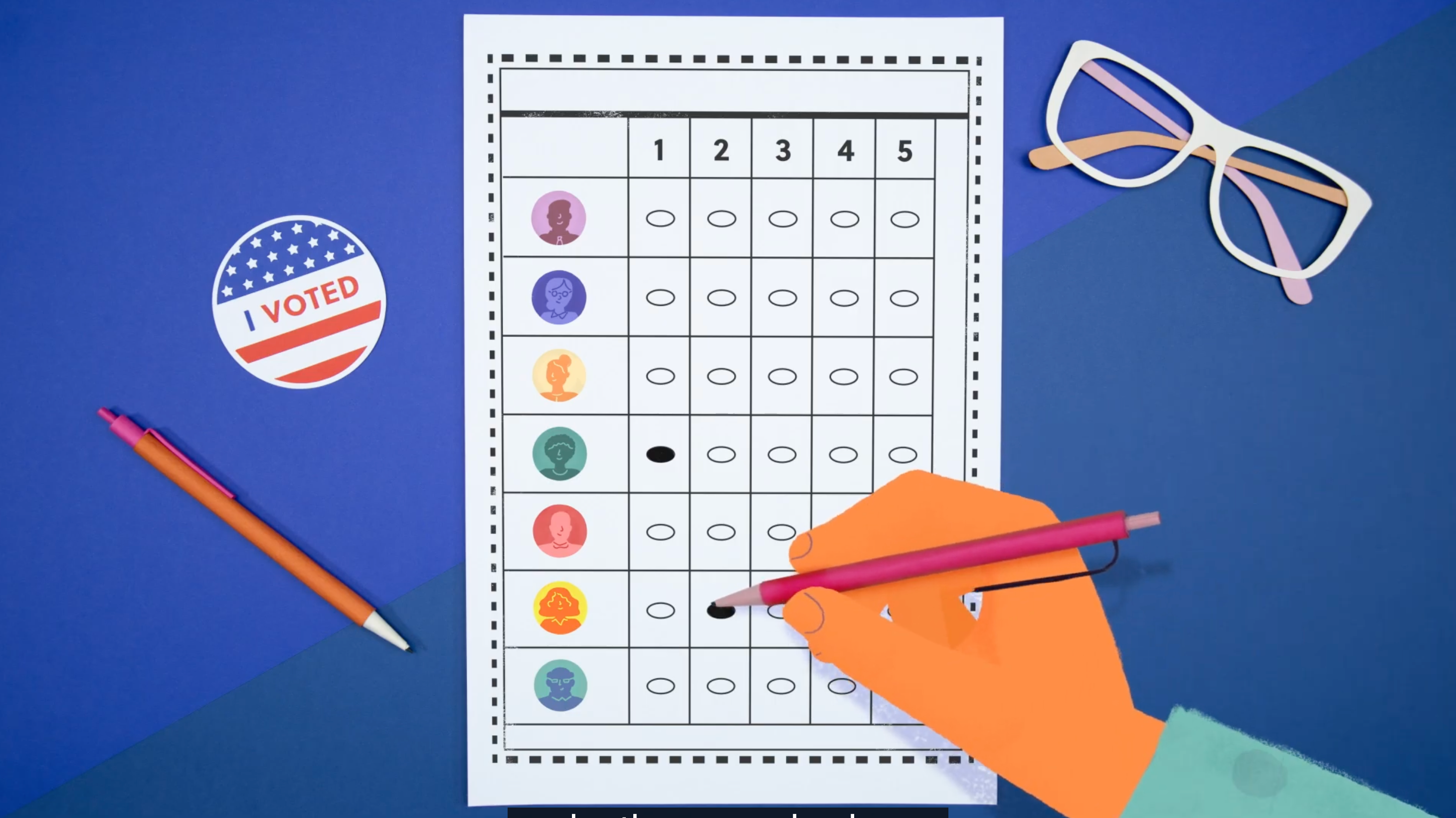
But what exactly does ranked choice voting even mean? The Ranked Choice Voting Resource Center provides a generalized idea: this system allows voters the opportunity to rank candidates in order of their preference. In the simplest form of the modern voting system, if a candidate originally receives more than half of the first-rank votes, they win. However, if this is not the case, the election system goes into what is called “instant runoffs”. This is when the candidate with the fewest votes is eliminated, and the votes from that eliminated candidate will be instead given to all the other candidates, as decided by what the voter’s second choice is on their ballot. The instant runoffs continue until a majority winner is decided.
Although ranked choice voting seems like a small change from other mechanisms such as the popular vote (where the majority still wins), adopting this method of voting has drastic ramifications for the voter’s voice in particular.
From an optimist’s point of view, ranked choice voting can be revolutionary for the political landscape. It eliminates unnecessary primary elections, which happen in some districts where no candidate has the majority of the votes. This has the possibility of preventing candidates from campaigning and voters from coming to the polls, thus averting low turnout in these extra elections. These elections guarantee major stakes for the candidates in the electorate once the process is over. Political theorists also say that ranked choice voting could lead to a decrease in divisive, extremist politics. For example, studies regarding campaign rhetoric become more positive with the use of the system. These benefits manifest in proportional representation by encouraging collaboration between multiple parties and reducing polarization, as voters are allowed to choose multiple candidates.
However, from a pessimist’s point of view, ranked choice voting can become a disaster for the democratic electoral process. Many believe that this system potentially creates barriers for minority voters. According to Dana Guterman, who cites empirical examples from Nolan McCarty’s research, ranked choice voting increases the likelihood of non-majority candidates going uncounted when the final stage of ranked choice voting takes place, particularly in districts with high minority concentration. This can cause ballot exhaustion among minorities, reducing the likelihood of these individuals voting. The increase in ballot exhaustion as a result of the voting system could thus indirectly cause a less inclusive voting community, which limits the voter’s voice.
Without articles like these, ranked choice voting can be confusing for the average voter, especially in the political status quo of only being able to select one candidate. It will take much time for ranked choice voting to be considered as a voting system that can replace all others nationwide.
Bibliography
- Does Ranked Choice Voting Create Barriers for Minority Voters? – Ash Center. (2025, February 18). Ash Center.
- HISTORY OF RCV - Ranked Choice Voting Resource Center. (2017). In Ranked Choice Voting Resource Center.
- Learn about | NYC Board of Elections. (2025). In Vote.nyc.
- WHY ADOPT RCV? - Ranked Choice Voting Resource Center. (2021). Ranked Choice Voting Resource Center.